Delayed wound healing: What are the possible causes, and how can photobiomodulation accelerate tissue repair?

A wound that doesn’t heal, a fracture that takes weeks to heal with no visible progress, scars that thicken instead of fading: delayed wound healing is a reality that affects far more people than we realize. Understanding the mechanisms that hinder tissue regeneration is already a first step toward a smoother recovery. What if red light could help speed up this process? This is precisely what photobiomodulation (PBM) explores, with increasingly well-documented results.
Causes of delayed wound healing: what hinders tissue repair
Wound healing is a remarkably precise biological process. It involves several successive phases: initial inflammation, cell proliferation, collagen production, and finally tissue remodeling. Each of these stages can be disrupted, leading to a delay in healing of varying severity.
Among systemic factors, diabetes tops the list: it impairs microcirculation and reduces the ability of cells to respond to repair signals. Venous insufficiency, zinc and vitamin C deficiencies, and chronic inflammation have similar effects. These conditions deprive regenerating tissues of the resources they need to heal.
At the local level, there are just as many causes of delayed wound healing:
- A bacterial infection or colonization of the wound, which sustains a persistent inflammatory response and prevents the process from progressing to the reconstruction phase
- Insufficient blood supply to the injured area, which limits oxygen delivery and slows down the production of new tissue
- Improper support (too tight, too loose, or poorly positioned), which mechanically disrupts the formation of scar tissue
In the case of fractures, bone healing adds an additional layer of complexity. A fracture that normally heals in six to eight weeks may, depending on its location or the individual’s profile, take two to three times as long. Bone healing depends on precise coordination between osteoblasts, stem cells, and local growth factors. If this process is disrupted, there is a real risk of delayed bone healing, with consequences for post-fracture recovery that can extend over several months.
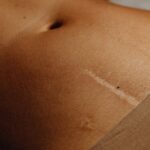
Postoperative scars also have their own specific characteristics. In the postoperative period, tissues are subjected to dual stress (the wound itself and the inflammatory response associated with the procedure), which increases the risk of scar complications, particularly when local blood supply is already compromised.
How photobiomodulation (PBM) affects tissues
Photobiomodulation (PBM) relies on the use of specific wavelengths of light to stimulate the body’s natural cellular regeneration processes. These specific wavelengths, located in the red light spectrum (630 to 680 nm) and the infrared light spectrum (800 to 1000 nm), penetrate tissues without heating them, triggering a photochemical reaction in the mitochondria.
The mechanism works as follows: photons emitted by the lamp, laser, or LED panel are absorbed by cytochrome c oxidase, an enzyme in the mitochondrial respiratory chain. This absorption triggers an increase in the production of ATP, the fundamental energy molecule of every living cell. The more energy the cells have, the more effectively they can perform their functions, whether it be reducing inflammation, producing collagen, closing a wound, or regenerating bone tissue.
The use of photobiomodulation on bone tissue has been studied in various contexts involving fractures and bone surgery. Available data show increased osteoblast proliferation, improved collagen production, and faster bone formation in the irradiated areas. These effects are particularly valuable in cases of delayed healing where conventional treatments fall short.
When applied to skin wounds and postoperative scars, PBM helps reduce local inflammation, stimulate microcirculation, and improve the density of scar tissue. Pain relief in these areas is also a commonly reported benefit, enabling individuals to better tolerate their recovery and maintain an appropriate level of activity that promotes healing.
Device, wavelength, sessions: the factors that make a difference
The effectiveness of photobiomodulation depends heavily on the precision of the parameters used. The choice of device, the emitted wavelength, the power (expressed in mW or W/cm²), and the frequency of sessions are all key factors in determining the results achieved.
Red light, with its short wavelengths, primarily affects superficial tissues: skin, scars, and open wounds. Infrared light, whose waves penetrate more deeply, is better suited for reaching muscle, tendon, or bone tissue. The most commonly used devices in this context are:
- Large-area LED panels, which can illuminate a wide area and are well-suited for post-operative applications or general recovery settings
- Low-intensity laser probes, which are more targeted and provide precise treatment for a wound, fracture, or specific painful area
- Devices that combine red and infrared LEDs, including models designed for post-fracture rehabilitation, can target multiple tissue depths simultaneously
The frequency of sessions varies depending on the situation. In the first few weeks following a trauma or procedure, frequent sessions (every other day) help support the body’s regenerative processes during their most active phase. Subsequently, gradually spacing out the sessions maintains the effects without overwhelming the cellular response. The duration of each session generally ranges from ten to twenty minutes, depending on the treated area and the device’s power.
What PBM Can Actually Contribute to Recovery
The use of photobiomodulation in cases of delayed wound healing is not intended to replace standard care; rather, it is used as a complement to it. Immobilization remains necessary for fractures, wound monitoring remains essential for skin injuries, and dietary adjustments remain crucial for supporting cellular regeneration.
What PBM does is stimulate the cellular environment, promoting regeneration where it has been slowed down. By reducing inflammation, improving microcirculation, and boosting cellular energy production, photobiomodulation sessions create conditions more conducive to healing, whether it involves a skin wound, a stubborn post-surgical scar, or a fracture that is slow to heal.
Feedback, confirmed by a growing body of published research, indicates a reduction in pain associated with these conditions, a visible improvement in scarring, and, in some cases of complex fractures, a significant acceleration of bone healing. These results are not uniform, and individual variability remains a factor to consider. However, for individuals facing delayed wound healing that does not respond to conventional treatments, photobiomodulation represents a serious, scientifically grounded option that is accessible without major adverse effects.
See also:

 Arthrose du genou et photobiomodulation : ce que montrent les études récentesPar Adèle, le 1 avril 2026
- Fibromyalgie : pourquoi la photobiomodulation séduit les centres antidouleurPar Adèle, le 8 janvier 2026
- Lumière rouge et psoriasis : comment la photobiomodulation agit sur les plaquesPar Adèle, le 24 juin 2025
- Photobiomodulation et performance sportive : retour d’expériencePar Adèle, le 3 décembre 2025
- Photobiomodulation pour le COVID long : état des lieuxPar Adèle, le 15 septembre 2025
- Alzheimer, Parkinson, dépression : où en est la neuro-photobiomodulation ?Par Adèle, le 6 novembre 2025
- Stress, inflammation et cuir chevelu : comment la photobiomodulation agit-elle en synergie ?Par Adèle, le 25 février 2026
- Photobiomodulation vaginale : la révolution intime ?Par Adèle, le 27 juin 2025