Hair Loss in Women: What Are the Natural and Innovative Solutions? A Closer Look at Photobiomodulation

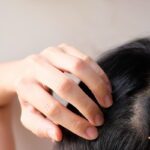
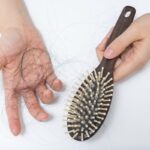
Finding handfuls of hair in your brush, watching your part gradually widen, noticing that your ponytail has thinned out… These signs, often dismissed as trivial, affect millions of women. Hair loss remains a topic that’s rarely discussed, as if the loss of hair density were an inevitable, silent fate. It isn’t. Natural solutions exist, as do innovative techniques.
Understanding Hair Loss in Women: What Are the Causes?
Before considering any course of action, it’s important to understand what’s really going on. Hair loss in women is rarely caused by a single factor. It’s most often the result of a combination of factors, and an accurate diagnosis is the essential first step toward effective treatment.
Androgenetic alopecia, commonly associated with male pattern baldness, also plays a major role in women. It does not manifest as a receding hairline, but rather as diffuse thinning on the top of the scalp, which can sometimes be difficult to notice in its early stages. This form of alopecia is often hereditary, but hormonal fluctuations (pregnancy, menopause, discontinuation of birth control) can trigger or worsen the condition of the scalp.
Other factors often come into play:
- Chronic stress, which disrupts the hair follicle life cycle and causes hair to enter the shedding phase, sometimes several weeks after the triggering event.
- Nutritional deficiencies—particularly in iron, zinc, or vitamin D—weaken the hair at the root and gradually deteriorate the overall condition of the hair.
- Thyroid disorders, which are often overlooked, can have significant and long-lasting effects on the skin and hair follicles.
A personalized assessment conducted by a professional helps identify the underlying causes of hair loss. This hair analysis determines the entire treatment plan and guides you toward the most appropriate treatments. Without it, women often feel their way in the dark, trying out products without truly gauging their effectiveness.
Natural approaches: supplements, scalp care, and a healthy lifestyle
Once the causes have been identified, natural approaches can provide real support, provided they are chosen wisely. Dietary supplements specifically formulated for hair (biotin, folic acid, zinc, keratin) help improve hair strength and support regrowth when a deficiency is confirmed. Their effectiveness depends directly on how regularly they are taken and how well they match each individual’s specific needs.
A scalp care routine deserves your full attention. Regular massages using suitable plant-based oils, such as castor oil or jojoba oil, stimulate local microcirculation and promote hair regrowth. This simple step, repeated for a few minutes each day, directly boosts follicle vitality and gradually improves the quality of the hair produced. Its role in stimulating hair growth is often underestimated, even though the observed effects on hair density are real.
Diet and overall lifestyle form the foundation of everything. A varied diet, rich in protein, omega-3, and micronutrients, helps maintain healthy hair over the long term. Limiting stressors, maintaining a regular sleep schedule, and avoiding hairstyles that are too tight: these are all practical steps, accessible to everyone, that help preserve the health of your hair.
Red light and photobiomodulation: a cutting-edge technique for stimulating hair regrowth
Among the innovative techniques attracting growing interest in the hair care market, photobiomodulation stands out. This technique relies on the effects of red light and wavelengths close to infrared on hair follicle cells. Its effectiveness is the subject of rigorous studies, and industry professionals are taking an increasing interest in it.
Specifically, red light penetrates the outer layers of the skin and scalp to stimulate the activity of mitochondria, the cells’ powerhouses. This has multiple effects on the hair follicles: hair cells are better oxygenated, growth factors naturally present in the root are activated, and hair regrowth is gradually supported. Women who have undergone these sessions generally report a visible improvement in hair density after a few weeks.
The LED devices available on the market can be used at home without any time constraints, which is a real advantage for women with busy schedules. However, it is important to ensure that the products you choose use wavelengths suitable for hair treatment and to consult with professionals before starting. The user experience varies depending on the device, its power, and the frequency of sessions.
Photobiomodulation can be part of a comprehensive and responsible strategy for managing hair loss. It does not preclude other approaches, and its role as a complement to natural treatments or more targeted techniques makes it a particularly attractive option in the market for innovative hair care solutions.
What about hair transplants?
Hair transplantation is typically considered for cases of long-standing, persistent hair loss that has not responded to other treatments. The procedure involves harvesting healthy hair follicles—usually from the back of the head—and transplanting them into the balding areas. It is intended for a specific group of women, identified following a thorough evaluation by a specialized team.
In Paris, as in other major cities, hair transplant specialists offer consultations to assess the feasibility of the procedure and estimate the expected results in terms of density and regrowth. The techniques used have evolved significantly, and the experience gained by specialized teams now ensures results that are far more natural than in the past.
This option does not rule out the others: red light photobiomodulation can be performed beforehand to prepare the scalp and strengthen the follicles, and then afterward to support the regrowth of the transplanted hair. Combining these techniques often yields better results than using either one alone, and an increasing number of professionals are recommending this integrated approach.
Act early, act with information
Hair loss in women is not inevitable, but it can be managed more effectively when addressed early and with the right approach. The sooner hair thinning is addressed, the more options are available. Solutions exist, whether they involve natural approaches such as dietary supplements, innovative techniques like LED photobiomodulation, or more targeted procedures such as hair transplantation.
The first step: don’t wait. Contact a professional by phone or in person, get a personalized hair assessment, and develop a care plan tailored to your specific needs. The condition of your hair changes over time: taking a responsible approach—using products and techniques suited to your needs—remains the best way to preserve your hair’s health in the long run.
Also worth reading on The PBM:


- Fibromyalgie : pourquoi la photobiomodulation séduit les centres antidouleurPar Adèle, le 8 janvier 2026
- Fracture persistante : la photobiomodulation peut-elle accélérer la guérison ?Par Adèle, le 7 juillet 2025
- Arthrose du genou et photobiomodulation : ce que montrent les études récentesPar Adèle, le 1 avril 2026
- Stress, inflammation et cuir chevelu : comment la photobiomodulation agit-elle en synergie ?Par Adèle, le 25 février 2026
- Photobiomodulation pour le COVID long : état des lieuxPar Adèle, le 15 septembre 2025
- Lumière rouge et psoriasis : comment la photobiomodulation agit sur les plaquesPar Adèle, le 24 juin 2025
- Alzheimer, Parkinson, dépression : où en est la neuro-photobiomodulation ?Par Adèle, le 6 novembre 2025
- Photobiomodulation et performance sportive : retour d’expériencePar Adèle, le 3 décembre 2025