Red light and psoriasis: how photobiomodulation affects the plaques
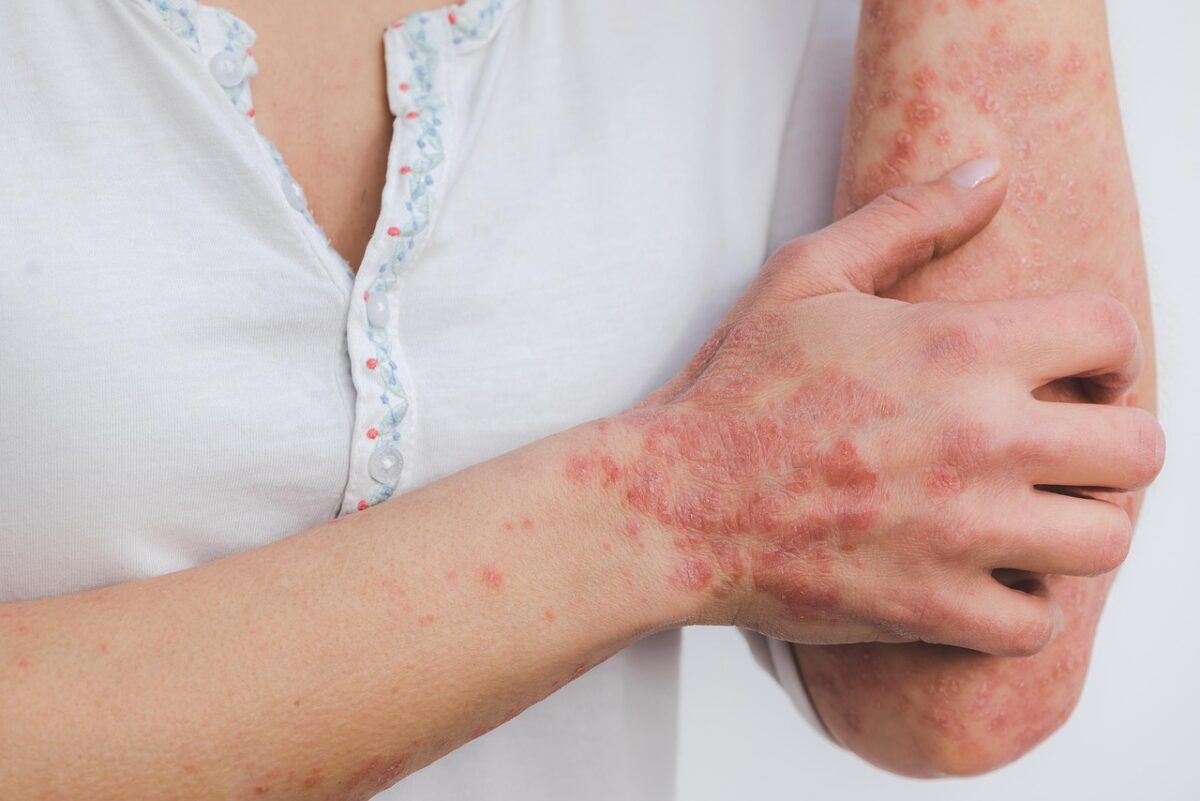
Psoriasis affects approximately 2 to 3% of the global population. These persistent, often painful plaques, which are resistant to many treatments, lead many people to explore alternative approaches to better manage them on a daily basis. Photobiomodulation—specifically red light and infrared light—is generating growing interest in this context. Here is what we know about its effects and how it works at the cellular level.
What is photobiomodulation, and why does the skin respond to it?
Photobiomodulation (PBM) is a technique that uses specific wavelengths of LED light to stimulate biological responses in cells. Unlike heat or harsh radiation, the light produced by light-emitting diodes acts in a gentle and targeted manner: it is absorbed by photoreceptors found in the mitochondria, the powerhouses of each cell.
The skin is the organ most directly exposed to this light. It responds to wavelengths in the visible red range (630–660 nm) and the near-infrared range (800–850 nm). These two ranges penetrate the skin layers to different depths, and it is precisely this characteristic that makes them suitable for use on psoriasis plaques.
How red light affects the mechanisms of psoriasis
Psoriasis is a condition in which skin cells regenerate much too quickly. This accelerated cell regeneration cycle leads to the visible buildup of plaques. Red light, by acting on cellular metabolism, helps to gradually regulate this process.
Several effects have been documented in studies on PBM and inflammatory skin conditions:
- Red LED light helps reduce local inflammatory markers, which may help calm the excessive reactivity of immune cells present in the plaques.
- It supports collagen production and wound healing, two processes that help restore a healthier, less reactive skin barrier.
This is not an immediate process: the effects develop over several weeks of regular sessions, in line with the time required for cellular regeneration.
Infrared light: deep-penetrating action
Infrared light penetrates deeper into the tissue than visible red light. It reaches the dermal layers where cells involved in chronic inflammation and tissue remodeling are located.
As part of a treatment regimen for psoriasis plaques, infrared light complements the effects of red light by acting on two levels simultaneously. This dual wavelength approach is one of the reasons why photobiomodulation devices that combine red and infrared light are often preferred for skin applications.
Infrared LED light specifically targets local microcirculation, promoting a better supply of oxygen and nutrients to regenerating cells. This subtle vascular support helps the skin gradually become more resilient and less prone to flare-ups.
LED masks, LED lamps: Which devices are best for which areas?
The design of the device directly affects its effectiveness and ease of use. For panels placed on the face, an LED mask designed specifically for facial use ensures even coverage and maintains consistent wavelengths across the target area. These LED masks are now available to the general public and can easily be incorporated into a beauty routine.
For body areas (elbows, knees, lower back), LED lamps offer greater flexibility. Some devices allow you to target specific areas for a specific duration and at an appropriate intensity. Consistency in treatment remains the key factor: studies on PBM generally observe the most noticeable effects after 8 to 12 weeks of continuous use.
Devices that use professional-grade light-emitting diodes ensure consistent wavelengths throughout the treatment session, which is essential for the LED light to produce measurable effects on the skin.
What results can we expect, and how long will it take?
Results vary from person to person. Some people notice a visible reduction in redness and a flattening of the patches as early as the fourth or fifth week. Others notice an improvement in skin comfort: less tightness, softer skin, and reduced sensitivity.
The effectiveness of photobiomodulation in managing psoriasis symptoms depends on regular use, appropriate wavelengths, and sufficient intensity. A device with insufficient intensity or one used too infrequently will produce few visible results. This is why it is recommended to choose devices with clearly documented technical specifications.
Side effects from red light and infrared light are rare and generally mild: mild, temporary redness may occur when you first start using the device, while your skin adjusts. In the vast majority of cases, these side effects do not require you to stop using the device.
Photobiomodulation is part of a comprehensive approach to skin health
PBM is not a one-size-fits-all solution. It is intended to complement a consistent skincare routine, just like moisturizing, sun protection, or stress management—a known factor that can exacerbate flare-ups.
People who incorporate red LED light into their daily routines often report a positive impact on their overall experience of the condition: a better relationship with their skin, a sense of actively managing their comfort, and a sense of routine that structures their skincare regimen. This very real psychological benefit should not be underestimated.
Photobiomodulation offers a gentle approach, with no significant side effects, to supporting the skin’s natural cycles of cell regeneration and wound healing. While it does not replace professional medical advice, it provides a practical tool for those looking for a different way to treat their skin lesions.
Frequently Asked Questions
Is red light therapy suitable for all types of psoriasis?
Red light and infrared light can be used to treat various forms of psoriasis, including both classic plaque psoriasis and localized forms. Effectiveness varies depending on the extent of the affected areas and the frequency of treatment sessions. For widespread or severe cases, consultation with a specialist is essential.
How many sessions are needed before seeing results?
Most studies on photobiomodulation report measurable effects after 8 to 12 weeks of regular sessions. Sessions lasting 10 to 20 minutes, several times a week, generally form the basis of an effective routine. Consistency is more important than the length of each session.
Can a facial LED mask be used on facial psoriasis patches?
Yes, LED face masks emit wavelengths that are suitable for use on sensitive or reactive skin. You should check that the device you choose includes both red light (630–660 nm) and infrared light (800–850 nm) to target both layers of the skin.
Does PBM replace standard psoriasis treatment?
Photobiomodulation should be viewed as a complement, not a substitute. It can be incorporated into a skincare routine alongside emollients, moisturizers, and other treatments. It is not a substitute for specialized medical care.
Are there any contraindications for LED light therapy for psoriasis?
The use of red or infrared LED light is generally well tolerated. Certain precautions apply if you are taking photosensitizing medications, have an eye condition, or are pregnant. If in doubt, consult a healthcare professional before starting.
A Different Approach to Skincare
Psoriasis often means living with skin that isn’t always easy to understand. Photobiomodulation does not provide a definitive solution, but it offers a practical, accessible, and well-tolerated way to support cell regeneration and help manage the discomfort of plaques week after week. Treating your skin with red light and infrared LED light means choosing a gentle and consistent approach, tailored to each individual’s needs.
See also:

 Fracture persistante : la photobiomodulation peut-elle accélérer la guérison ?Par Adèle, le 7 juillet 2025
- Photobiomodulation pour le COVID long : état des lieuxPar Adèle, le 15 septembre 2025
- Alzheimer, Parkinson, dépression : où en est la neuro-photobiomodulation ?Par Adèle, le 6 novembre 2025
- Stress, inflammation et cuir chevelu : comment la photobiomodulation agit-elle en synergie ?Par Adèle, le 25 février 2026
- Photobiomodulation vaginale : la révolution intime ?Par Adèle, le 27 juin 2025
- Photobiomodulation et performance sportive : retour d’expériencePar Adèle, le 3 décembre 2025
- Fibromyalgie : pourquoi la photobiomodulation séduit les centres antidouleurPar Adèle, le 8 janvier 2026
- Lumière rouge et psoriasis : comment la photobiomodulation agit sur les plaquesPar Adèle, le 24 juin 2025