Understanding the scientific basis of photobiomodulation
Before its uses, photobiomodulation is fascinating because of its biological basis. It is based on precise physical and cellular interactions between photons emitted at specific wavelengths and light-sensitive intracellular structures. This scientific base is constantly evolving, enriched by advances in biophysics, biochemistry and optical engineering.
Red light, infrared and laser: targeted wavelengths
The choice of light, its power, form (LED or laser) and wavelength determine its biological effect. The red and near-infrared zones of the light spectrum are the most widely used for their ability to penetrate living tissue. Each wavelength interacts differently with water, hemoglobin, melanin or cellular structures, directly influencing the effectiveness of the radiation.
Cellular mechanisms activated by photons
One of the best-studied mechanisms is the activation of cytochromes in mitochondria. These structures, essential for cellular energy production, react to light by modifying their metabolic activity. This process promotes ATP production, reduced oxidative stress and a cascade of biological responses that can improve tissue repair, circulation and inflammatory balance.
Tissue optics, a key penetration factor
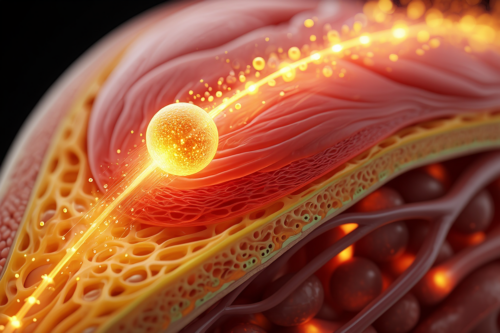
The way in which light penetrates the skin depends on many factors: angle of emission, power density, duration of exposure, but also individual characteristics such as skin color or tissue thickness. Melanin, for example, can absorb part of the photons, modifying the intensity perceived at depth. Tissue optics, a discipline at the crossroads of physics and biology, enables us to better model these complex interactions.
Expanding research avenues
Beyond established mechanisms, emerging research is looking at the effect of photobiomodulation on the skin microbiome, neuronal plasticity and gene expression. These explorations pave the way for new uses, and justify the need for rigorous studies to validate, frame and refine protocols. Science is constantly deepening our understanding of a technology at the interface of the visible and the invisible.