How photons pass through the skin: diving into tissue optics

Light does much more than simply reflect off our skin. At certain wavelengths, it penetrates the skin, passes through the layers of tissue, and interacts with our cells at surprising depths. Understanding this phenomenon means understanding why photobiomodulation (PBM) is generating growing interest in the wellness sector.
What the skin really does when exposed to light
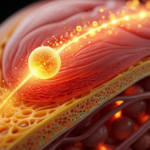
The skin is not a homogeneous surface. It is a layered structure, each layer with its own optical properties: the epidermis, the dermis, the hypodermis, and beneath them the muscles and deeper structures. When a photon strikes the skin’s surface, several phenomena occur simultaneously.
Some of the light is reflected directly, as with any object. Another portion is absorbed by the molecules present in the outermost layers: melanin, hemoglobin, and water. The remainder—and this is where photobiomodulation becomes interesting—scatters through the tissues along a complex and random path.
Scattering is the dominant phenomenon in biological tissues. A photon does not travel in a straight line within the skin. It bounces, deflects, and changes direction at every interface between two structures of different density. This erratic behavior lengthens its effective path but also allows it to reach areas that would be inaccessible by a direct path.
Wavelengths: Not All Are Equal When It Comes to Tissues
A photon's ability to penetrate the skin depends directly on its wavelength. This is the most critical factor in tissue optics.
Short wavelengths of visible light, such as blue or green, are strongly absorbed by melanin and hemoglobin. They are quickly absorbed, often in the epidermis or superficial dermis. Red light, around 630 to 700 nanometers, penetrates much more effectively. It is absorbed less by these chromophores and reaches the deep dermis, and even the subcutaneous tissues.
Most PBM (photobiomodulation) protocols fall within the so-called “therapeutic optical window”: approximately between 600 and 1,100 nanometers. Within this range, absorption is minimal and diffusion remains favorable. Near-infrared light, beyond 800 nanometers, penetrates even deeper than red light. It can reach muscles, tendons, and even certain bone structures, depending on tissue thickness.
How is penetration depth calculated?
In tissue physics, the concept of “effective penetration depth” is used, which corresponds to the distance at which light intensity drops to approximately 37% of its initial value. Beyond that point, the light is too scattered and too weak to trigger significant cellular effects.
For red light at 660 nm, this penetration depth is on the order of a few millimeters in soft tissue. For infrared light at 830–850 nm, it can exceed one centimeter. These figures vary depending on the area of the body, skin pigmentation, skin thickness, and the nature of the structures being penetrated.
The pioneers of photobiomodulation—including Endre Mester as early as the 1960s and, more recently, researchers such as Tianhong Dai and Luc Benichou—have helped map these light-tissue interactions. Their work laid the groundwork for our current understanding of the cellular effects of light.
What happens at the cellular level
When a photon reaches its target, it can be absorbed by a specific cellular chromophore. The most extensively studied chromophore in photobiomodulation (PBM) is cytochrome oxidase, a key enzyme in the mitochondrial respiratory chain. The absorption of a photon by this molecule can stimulate cellular energy production in the form of ATP, promote cellular regeneration, and temporarily alter the cell’s behavior.
It is this mechanism that explains the effects observed on the skin, local blood circulation, and hair regrowth on the scalp. The light does not act through heat: LED phototherapy devices and low-level laser therapy devices deliver non-thermal energy. The effect is photochemical, not physical.
NASA has helped popularize this research by studying the effects of LED light on cell regeneration in space, paving the way for numerous wellness applications on Earth.
LED phototherapy and low-intensity laser therapy: two approaches based on the same physics
Red and infrared light can be emitted by two main types of sources used in photobiomodulation (PBM).
Low-intensity lasers, sometimes referred to as “cold lasers” or low-level laser therapy, produce coherent, highly concentrated light. This coherence allows for precise penetration, which is useful for targeting specific areas. Lasers are often used for the management of chronic pain or for localized applications on the scalp as part of hair regrowth protocols.
LED phototherapy devices, on the other hand, produce non-coherent but diffuse light, covering larger areas. A photobiomodulation session using LEDs allows for the simultaneous treatment of a large area of skin, making it a format well-suited for daily wellness. The difference in penetration depth between lasers and LEDs with the same wavelength is modest in practice: it is primarily the energy density delivered and the duration of the sessions that cause results to vary.
Why are red light and infrared light so widely used?
Red and infrared light dominate light therapy and laser therapy applications for one simple reason: they fall within the optical window of human biological tissues. Red light is visible, practical, and well absorbed by cytochrome oxidase. Near-infrared light penetrates deeper and reaches internal structures that are inaccessible to visible light.
This complementary nature explains why many photobiomodulation (PBM) devices combine both wavelengths. To relieve deep-seated pain, an infrared protocol is preferred. To treat the skin or superficial blood circulation, red light is often sufficient. Wellness treatment sessions are tailored to these parameters depending on the area being treated.
Frequently Asked Questions
Does light really pass through the entire skin?
Red and infrared light actually penetrates several millimeters to over a centimeter into the tissue, depending on the wavelength and the area of the body. It does not pass through the entire body, but reaches structures well beyond the visible surface.
What is the difference between a photobiomodulation session and a simple red light?
Photobiomodulation (PBM) uses specific wavelengths, a calibrated energy density, and a defined treatment duration. A standard household red light lamp generally does not offer these controlled parameters, which limits its effect at the cellular level.
Is cytochrome oxidase present throughout the body?
Cytochrome oxidase is a universal enzyme in the mitochondrial respiratory chain, found in nearly all cells of the human body. This is why the effects of photobiomodulation can be observed in a wide variety of tissues.
Are there any side effects associated with LED phototherapy?
Side effects reported in the literature regarding low-power LED phototherapy devices are rare and generally mild (mild, temporary redness; sensation of warmth). Wellness devices adhere to exposure levels that are safe for regular use.
How many sessions does it take to see results?
The number of sessions varies depending on the goals and the individual. Wellness protocols based on photobiomodulation generally recommend several sessions spread out over a few weeks, with a regular schedule that promotes the accumulation of cellular effects.
Light: a language that cells can understand
The field of tissue optics reveals a fascinating reality: our bodies are not opaque to light. They filter it, scatter it, and channel it, and some of our cells use it as a signal to adjust their functioning. Photobiomodulation (PBM) builds on this natural biological process—without force, without heat, and without altering the tissues.
Understanding how photons penetrate the skin means understanding why the choice of wavelengths, the power output, and the consistency of treatment sessions matter just as much as the technology itself. It is this precision that distinguishes a serious wellness approach from a mere light effect.
See also:

 Comment les photons traversent la peau : plongée dans l’optique tissulairePar Adèle, le 5 août 2025
- Du photon à la cellule : le voyage de la lumière en photobiomodulationPar Adèle, le 28 juin 2025
- LED rouges, lasers et infrarouge proche : quelle longueur d’onde pour quels effets ?Par Adèle, le 17 décembre 2025
- Photobiomodulation : 8 idées reçues qui freinent son adoptionPar Adèle, le 1 septembre 2025
- Photobiomodulation : placebo ou preuve scientifique ?Par Adèle, le 22 janvier 2026
- 660 nm vs 850 nm : guide comparatif des longueurs d’onde les plus utiliséesPar Adèle, le 5 avril 2026
- Types de peau et photobiomodulation : quel impact de la mélanine ?Par Adèle, le 10 février 2026
- Photobiomodulation et microbiome cutané : piste de recherche émergentePar Adèle, le 30 juin 2025