From photon to cell: the journey of light in photobiomodulation

Red light penetrates your skin. It reaches your mitochondria. It triggers a cascade of biological reactions that your body has always known, but that science has taken decades to map out. Photobiomodulation is precisely this journey: that of a photon that starts at an LED diode and ends its journey at the heart of your cell, where it releases energy that supports cellular regeneration. Understanding this journey means understanding why this wellness approach is generating growing interest, from aesthetic clinics to research laboratories.
What is a photon, and why is it so useful?
A photon is the smallest unit of light energy. It has no mass, travels at the speed of light, and carries energy that is exactly proportional to its frequency. What distinguishes the photons used in photobiomodulation is their wavelength: between approximately 630 and 850 nanometers, which corresponds to the range of visible red and near-infrared light.
These wavelengths are not chosen at random. They correspond to what researchers call the “optical window” of biological tissues: the range where light penetrates the skin without being absorbed or scattered excessively. Red light (around 630 to 660 nm) acts primarily on the epidermis and superficial dermis, making it a valuable ally for skin care, collagen production, and acne management. Near-infrared light (810 to 850 nm) penetrates deeper, reaching the muscles, tendons, and even certain deep structures.
In fact, NASA helped popularize this research as early as the 1990s by studying red and infrared LEDs to accelerate wound healing in astronauts in zero gravity. This work paved the way for cellular light therapy as we know it today.
How does light enter the cell?
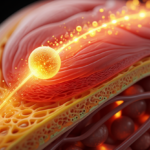
The journey begins at the skin’s surface. When an LED device emits light at the correct wavelength, the photons penetrate the epidermis by a few fractions of a millimeter. The skin is not a complete barrier: it filters and scatters the light, but allows some of the light energy to pass through, depending on the intensity and wavelength used.
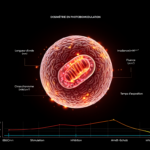
Once inside the tissues, photons are absorbed by specific molecules called chromophores. The main chromophore involved in photobiomodulation is cytochrome c oxidase, an enzyme found in mitochondria, the true powerhouses of every cell. This enzyme complex preferentially absorbs red and near-infrared light, which explains why these wavelengths have a biological effect where others do not.
The interaction between the photon and cytochrome c oxidase triggers a chain reaction. The stimulated enzyme produces more ATP (adenosine triphosphate), the molecule that powers all cellular processes. It’s like recharging a battery: the cell suddenly has extra energy to perform its natural functions.
What happens at the cellular level?
Increased ATP production is the starting point for a series of biological responses that researchers have gradually documented.
The first benefit relates to cellular regeneration. Cells with a better energy supply repair themselves more effectively, renew their structures more quickly, and contribute to firmer skin. This process includes the production of collagen and elastin, two proteins essential for skin firmness and elasticity. Fibroblasts, the cells responsible for this production, respond particularly well to red light wavelengths between 630 and 660 nm.
The second benefit relates to blood circulation. Red and near-infrared light promotes the release of nitric oxide, a vasodilator molecule. Blood vessels dilate, blood flow improves, and tissues receive more oxygen and nutrients. This effect is being studied in particular for its role in treating pigmentation spots, scalp care, and hair loss.
The third benefit relates to the regulation of inflammation. Light energy supports the body’s natural healing mechanisms without forcing or bypassing them. It is this characteristic that makes photobiomodulation particularly well-suited to a wellness approach: it works in harmony with what the body already knows how to do.
Which wavelengths are best suited for which applications?
The choice of wavelength largely determines the treatment area and the observed effects. It is not a matter of raw power, but of precision.
Wavelengths in the 630–660 nm range are the most commonly used in aesthetic treatments. They help improve skin radiance, support collagen production, and are being studied for their role in acne treatment. At these wavelengths, penetration remains superficial, making them suitable for facials and general skincare.
Near-infrared wavelengths, between 810 and 850 nm, penetrate deeper into the skin. They are preferred for muscle and joint treatments, as well as for scalp care aimed at supporting hair follicle vitality in cases of hair loss. A high-performance device often combines these two ranges for a so-called “full-body” or “face and body” effect, depending on the model.
LED devices available on the consumer market offer a variety of configurations. It is helpful to check the actual emitted wavelengths, power density (in mW/cm²), and fluence (in J/cm²) to ensure that the device falls within the recommended efficacy window. Regarding these aspects, the " Equipment and Technology " page on THE PBM website provides a comprehensive overview of the available technologies.
Is photobiomodulation safe?
The short answer is yes, provided that the instructions for use are followed. The side effects reported in the literature are rare and generally mild (mild sensitivity, temporary redness). Photobiomodulation does not use ionizing radiation, does not significantly heat the tissues, and does not cause damage when used correctly.
However, there are a few precautions worth mentioning. Direct exposure of the eyes to LEDs should be avoided. People with certain sensitivities, particularly skin sensitivities, should start with short sessions. The "Best Practices and Safety " page on THE PBM website details the recommendations to follow for using an LED device safely.
In fact, aesthetic medicine has been incorporating LED light into its aesthetic treatment protocols for several years now, reflecting a growing recognition of its safety profile. However, photobiomodulation in a wellness setting differs from a medical procedure: it supports and complements, without claiming to replace specialized medical care.
Frequently Asked Questions
How long does it take to see results with photobiomodulation?
Results depend on the frequency of sessions, the wavelength used, and the specific goals. In skincare, the first improvements in skin radiance and texture are often noticeable after three to four weeks of regular sessions. Collagen production takes several weeks to months, depending on the individual.
Is photobiomodulation effective on all skin types?
Available studies show that the cellular effects of red and near-infrared light are not related to skin phototype. Darker skin absorbs more light, which may require adjustments to the session duration to achieve equivalent penetration.
What is the difference between a consumer LED light and a professional LED light?
The main difference lies in power density and treatment area. A professional device delivers a higher fluence over a larger area, allowing for shorter sessions. A well-designed consumer device can achieve comparable results provided the exposure time is extended.
Can photobiomodulation help with acne?
Certain wavelengths in the red spectrum help regulate factors involved in acne, including sebum production and local inflammation. Regular facial treatments are often associated with an improvement in skin appearance and a reduction in redness.
Can photobiomodulation be used on the scalp?
Yes. There are devices specifically designed for the scalp, including LED helmets that use near-infrared wavelengths. They are intended to support the vitality of hair follicles and help reduce hair loss by stimulating local blood circulation.
Light, Cells, and Well-Being: A Dialogue That Has Only Just Begun
From the photon emitted by an LED diode to the mitochondrion that absorbs it, the journey is short in distance but rich in effects. Photobiomodulation is based on precise biophysics, selected wavelengths, and well-documented cellular mechanisms. It is not a vague promise: it is an interaction between light and living matter that decades of research have gradually brought to light.
For those who wish to incorporate this approach into their daily wellness routine, the starting point remains the same: understanding how light works, choosing a device suited to your needs, and maintaining a regular schedule of sessions. The photobiomodulation overview page and the applications page on THE PBM website offer additional resources to help you deepen your understanding.
See also:

 LED rouges, lasers et infrarouge proche : quelle longueur d’onde pour quels effets ?Par Adèle, le 17 décembre 2025
- Photobiomodulation et microbiome cutané : piste de recherche émergentePar Adèle, le 30 juin 2025
- Du photon à la cellule : le voyage de la lumière en photobiomodulationPar Adèle, le 28 juin 2025
- Photobiomodulation : placebo ou preuve scientifique ?Par Adèle, le 22 janvier 2026
- Comment les photons traversent la peau : plongée dans l’optique tissulairePar Adèle, le 5 août 2025
- Types de peau et photobiomodulation : quel impact de la mélanine ?Par Adèle, le 10 février 2026
- Dosimétrie en photobiomodulation : comprendre la fluence, l’irradiance et la dose optimalePar Adèle, le 28 octobre 2026
- Photobiomodulation : 8 idées reçues qui freinent son adoptionPar Adèle, le 1 septembre 2025
- 660 nm vs 850 nm : guide comparatif des longueurs d’onde les plus utiliséesPar Adèle, le 5 avril 2026
- Photobiomodulation et mitochondries : le rôle clé du cytochrome c oxydasePar Adèle, le 9 octobre 2026