Photobiomodulation: Placebo or Scientific Evidence?

A red light shone on the skin, a few minutes without pain, heat, or noise. The image might make you smile. Yet behind PBM photobiomodulation lies a body of scientific research that now comprises several thousand published studies. So, is it a placebo effect or real efficacy? Here’s what the research really says.
What light does to cells
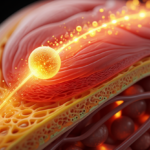
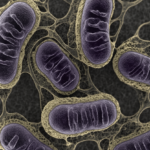
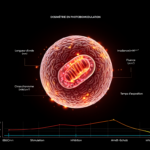
Photobiomodulation, or PBM, is based on a specific biological principle. LED (light-emitting diode) lamps or low-intensity lasers—what the English-language literature refers to as low-level laser therapy—emit light at wavelengths ranging from approximately 630 to 1,000 nm. These waves penetrate the skin and reach the mitochondria, the powerhouses of our cells. That is where everything happens.
The absorption of this red or near-infrared light by cellular photoreceptors triggers a cascade of reactions: ATP production increases, microcirculation improves, and inflammatory signals are modulated. In short, light acts as a biological catalyst on cells, not as a source of heat. This is what radically distinguishes LED light from a conventional aesthetic laser, whose effect is photothermal. The expected benefits therefore stem from this cellular mechanism, not from suggestion.
What the studies say: a mixed but solid picture
The issue of the placebo deserves serious consideration, as it underpins all research on LED photobiomodulation. For a study to be scientifically valid, it must compare a group exposed to active light with a group exposed to light with no demonstrated biological effect (the sham). This is precisely the method used in the vast majority of randomized controlled trials, and the results speak for themselves for several indications.
For facial skin, a Korean study involving 73 participants remains a benchmark. The participants received treatments using red LED (633 nm) and near-infrared (830 nm) light twice a week for four weeks. Visible results were documented: a reduction in wrinkles ranging from 26% to 36%, an improvement in skin elasticity of 14% to 19%, and skin biopsies confirming increased collagen production. The placebo group, exposed to white light without a specific wavelength, showed no significant improvement. The difference between the two groups is a direct answer to the question posed: no, this is not simply a placebo effect on the skin.
Numerous meta-analyses published in international scientific journals confirm the benefits of photobiomodulation (PBM) for the management of joint, muscle, and neuropathic pain. An international consensus involving twenty-one experts (study published in 2025 in the Journal of the American Academy of Dermatology) concludes that PBM is a safe and effective option for several documented indications, including pain management and the treatment of skin conditions. A large-scale Korean analysis published in 2025, compiling the results of numerous randomized controlled trials, concluded that there were statistically significant effects on pain reduction, tissue recovery, and skin improvement in the vast majority of cases studied.
Red and near-infrared light: two modes of action
To understand why results vary from one study to another, we must consider a fundamental technical point: each wavelength penetrates to a different depth in the tissue, producing distinct biological effects on the targeted cells. This distinction is key.
- Red light (630–700 nm): It penetrates the skin by a few millimeters, reaches the fibroblasts in the superficial dermis, and stimulates collagen production. It is particularly recommended for facials, acne-prone skin, reducing redness, and anti-aging treatments. Visible results in skin texture are generally noticeable after four to six weeks of regular treatment.
- Near-infrared light (800–1,100 nm): invisible to the naked eye, it penetrates deeper, reaching the muscles and joints. It is primarily studied for pain management and post-exercise recovery. Its effects on microcirculation and inflammation reduction have been documented in numerous studies.
- A combination of both: most modern LED masks and professional LED lamps combine these two wavelengths to simultaneously target both the superficial and deep layers of the skin. This is the approach with the most supporting evidence in the scientific literature.
Acne, collagen, pain: results are piling up
The documented benefits of photobiomodulation extend further than is often believed. In the case of acne, for example, blue light (415–470 nm) targets the bacteria responsible for breakouts, while the accompanying red light reduces inflammation. Clinical trials show a significant improvement in acne lesions after several weeks of regular sessions, with a reduction in inflammation observable as early as the first few treatments.
The evidence regarding collagen is particularly strong. Studies show a 31% increase in collagen production after twelve weeks of treatment, with visible improvements in skin texture and facial firmness. For someone starting an anti-aging regimen, the first improvements are generally noticeable after four to eight weeks, with two to three sessions per week. Consistency in treatment is the most critical factor in achieving lasting, visible results.
Regarding pain—whether joint, muscle, or related to conditions such as fibromyalgia—several systematic reviews published in 2024 and 2025 confirm that photobiomodulation helps improve the well-being of those affected. A systematic review on fibromyalgia (published in 2025, PRISMA), covering 17 studies and 857 participants, concludes that PBM delivered via low-intensity laser or LED light helps improve pain management and sleep quality.
Effects that take time to work their way through
One practical detail is worth noting: the effects of photobiomodulation are not immediate, and this is precisely what attests to their biological nature. Cells need time to respond to light stimulation, produce collagen, modulate inflammation, or regenerate tissue. The first improvements are generally noticeable after four to six weeks of regular treatment, and the most significant results are observed after eight to twelve weeks of treatment. This gradual progression is not a limitation: it is the hallmark of a mechanism that acts deeply, at the cellular level, rather than on the surface.
Science is a dynamic field, not a fixed truth
Research on photobiomodulation (PBM) is advancing rapidly, though not uniformly. For applications related to the skin, pain, and physical recovery, the accumulated evidence is robust and consistent. For other applications, such as transcranial photobiomodulation or certain neurological uses, the data remain preliminary and call for larger randomized trials. This is not a weakness: it is a sign of a vibrant scientific discipline that is advancing with rigor.
The answer to the question posed in the title is neither “placebo” nor “miracle.” Photobiomodulation is a non-invasive approach backed by a robust and growing body of scientific research, whose effects on cells, collagen, skin, and pain management are confirmed by increasingly rigorous studies. It simply deserves to be recognized for what it is: a well-documented wellness technology that works deeply and over the long term.
See also:

 Photobiomodulation : placebo ou preuve scientifique ?Par Adèle, le 22 janvier 2026
- Photobiomodulation : 8 idées reçues qui freinent son adoptionPar Adèle, le 1 septembre 2025
- Du photon à la cellule : le voyage de la lumière en photobiomodulationPar Adèle, le 28 juin 2025
- 660 nm vs 850 nm : guide comparatif des longueurs d’onde les plus utiliséesPar Adèle, le 5 avril 2026
- Photobiomodulation et microbiome cutané : piste de recherche émergentePar Adèle, le 30 juin 2025
- LED rouges, lasers et infrarouge proche : quelle longueur d’onde pour quels effets ?Par Adèle, le 17 décembre 2025
- Photobiomodulation et mitochondries : le rôle clé du cytochrome c oxydasePar Adèle, le 9 octobre 2026
- Types de peau et photobiomodulation : quel impact de la mélanine ?Par Adèle, le 10 février 2026
- Dosimétrie en photobiomodulation : comprendre la fluence, l’irradiance et la dose optimalePar Adèle, le 28 octobre 2026
- Comment les photons traversent la peau : plongée dans l’optique tissulairePar Adèle, le 5 août 2025