Photobiomodulation and Mitochondria: The Key Role of Cytochrome c Oxidase

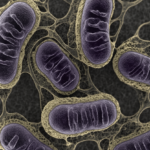
Photobiomodulation acts where energy is generated: at the heart of the mitochondria. When low-intensity light at the right wavelengths reaches our cells, it triggers a cascade of reactions that activates cytochrome c oxidase, a key enzyme in the respiratory chain. This cellular mechanism, which has been studied for several decades, now sheds light on how red light can support the body’s well-being from within.
What Light Does to Your Cells
Photobiomodulation (PBM) refers to the use of red or near-infrared light, emitted by a low-intensity laser or an LED, to stimulate biological processes without generating heat. Unlike surgical lasers, low-intensity lasers do not damage tissue; rather, they stimulate it at the subcellular level.
The entry point for this stimulation is a mitochondrial enzyme called cytochrome c oxidase (COX), also known as complex IV of the respiratory chain. This protein preferentially absorbs certain wavelengths, particularly between 630 and 850 nm, which corresponds precisely to the spectral window used in PBM. When low-intensity light reaches the cytochrome, it alters its enzymatic activity and boosts cellular energy production.
The COX Mechanism: From Light to ATP
To understand why photobiomodulation supports the body, we must follow the chain of reactions that is triggered as soon as a photon of red light strikes cytochrome c oxidase.
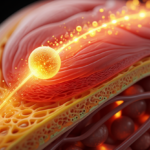
Under conditions of stress, cellular fatigue, or inflammation, nitric oxide (NO) accumulates on cytochrome c oxidase and blocks its activity. The mitochondria—the cells’ powerhouses—slow down, ATP production drops, and the cells run out of fuel. Red light acts precisely here: it dissociates nitric oxide from the active site of cytochrome c, freeing the enzyme and restarting the respiratory chain.
The process consists of three steps:
- Activation of cytochrome c oxidase: low-intensity light, absorbed by the enzyme’s chromophores, restores the activity of Complex IV. The electron transported in the respiratory chain resumes its normal flow.
- ATP Production: The reactivated respiratory chain produces more adenosine triphosphate (ATP), the universal energy molecule of cells. This increase in cellular energy levels has been documented in numerous studies, notably those by Tiina Karu, a Russian researcher who laid the biophysical foundations for photobiomodulation as early as the 1980s.
- Redox regulation and cellular signaling: Cytochrome activation also generates a transient increase in reactive oxygen species (ROS) and an influx of intracellular calcium. These signals trigger signaling cascades involved in cell survival, the regulation of oxidative stress, and the modulation of gene expression.
What Researchers Say
The work of Michael Hamblin, a researcher at Harvard Medical School and a leading figure in photobiomodulation research, has contributed significantly to documenting the cellular mechanisms described here. In numerous systematic reviews, he confirms that cytochrome c oxidase is indeed the primary photoacceptor of red and near-infrared light, and that its effects on ATP production and cellular signaling are measurable and reproducible.
Tiina Karu, for her part, demonstrated as early as the 1990s that light waves do not act uniformly: each wavelength is absorbed selectively, and only certain spectral ranges produce significant biological effects. This concept of optimal wavelength is at the heart of any rigorous approach to PBM.
This research has informed systematic reviews covering a variety of applications, particularly in the areas of muscle recovery, pain management, and cognitive well-being. Studies focusing on specific areas, such as the head and neck, have demonstrated measurable effects on local cellular regulation, with no significant side effects when the parameters are followed.
Photobiomodulation as a Tool for Prevention and Well-Being
Understanding the cellular mechanisms of PBM opens up a new perspective: that of a preventive rather than reactive approach. By regularly stimulating ATP production in cells that are still functional, photobiomodulation can support the body’s natural ability to maintain its internal balance.
Oxidative stress, which builds up silently as a result of fatigue, environmental stressors, or cellular aging, can be modulated by this light exposure. Red light then acts as a reset signal for cells that have lost their vitality but have not yet been irreversibly damaged.
This mechanism of cellular support makes PBM a natural complement to a holistic approach to well-being, just like diet, sleep, and physical activity.
Frequently Asked Questions
How does photobiomodulation work at the cellular level?
Photobiomodulation works by stimulating cytochrome c oxidase, a key enzyme in the mitochondrial respiratory chain. This enzyme absorbs red and near-infrared light, which boosts ATP production and triggers cellular signaling that promotes the body’s balance and recovery.
What is cytochrome c oxidase, and why is it important in PBM?
Cytochrome c oxidase (complex IV) is the primary photoacceptor of the light used in photobiomodulation. Identified by Tiina Karu as the primary site of action, it absorbs wavelengths between 630 and 850 nm and, once activated, reactivates the mitochondrial respiratory chain, increasing the level of ATP available in the cell.
What are the side effects of photobiomodulation?
When used within the recommended parameters (power, wavelength, duration), low-intensity light has no significant documented side effects. Research data, particularly the work of Michael Hamblin, confirm a favorable safety profile for low-intensity light applications when the recommended usage parameters are followed.
Does photobiomodulation have an effect on oxidative stress?
Yes. The activation of cytochrome c oxidase generates a controlled release of reactive oxygen species, which act as cellular signals rather than as destructive agents. This regulation of oxidative stress is one of the documented cellular mechanisms of PBM.
What wavelength should be used in photobiomodulation?
The most widely studied wavelengths range from 630 nm (visible red light) to 850 nm (near-infrared). These ranges correspond to the absorption peaks of cytochrome c oxidase and produce the most well-documented biological effects in photobiomodulation research.
Light as a Cellular Regulator
Cytochrome c oxidase is not just a biochemical detail: it is the tipping point between a cell at rest and a cell in full activity. Understanding this mechanism means understanding why photobiomodulation is generating so much interest in research on cellular well-being. For those who wish to delve deeper, exploring practical applications or optimal conditions for use is the best next step.
See also:

 Types de peau et photobiomodulation : quel impact de la mélanine ?Par Adèle, le 10 février 2026
- Photobiomodulation et microbiome cutané : piste de recherche émergentePar Adèle, le 30 juin 2025
- Photobiomodulation : placebo ou preuve scientifique ?Par Adèle, le 22 janvier 2026
- Photobiomodulation et mitochondries : le rôle clé du cytochrome c oxydasePar Adèle, le 9 octobre 2026
- Comment les photons traversent la peau : plongée dans l’optique tissulairePar Adèle, le 5 août 2025
- LED rouges, lasers et infrarouge proche : quelle longueur d’onde pour quels effets ?Par Adèle, le 17 décembre 2025
- Photobiomodulation : 8 idées reçues qui freinent son adoptionPar Adèle, le 1 septembre 2025
- 660 nm vs 850 nm : guide comparatif des longueurs d’onde les plus utiliséesPar Adèle, le 5 avril 2026
- Du photon à la cellule : le voyage de la lumière en photobiomodulationPar Adèle, le 28 juin 2025