Photobiomodulation and the Professional Sports Industry: Teams That Are Adopting It

Top sports teams leave nothing to chance. Recovery, nutrition, sleep—every detail counts. In recent years, a technology has quietly become a staple of their routines: photobiomodulation. Between cold baths and physical therapy sessions, red light therapy has found its place in the locker rooms of the world’s top clubs.
What is photobiomodulation (PBM), and why is the sports world interested in it?
Photobiomodulation (PBM) refers to the application of light at specific wavelengths—in the red and near-infrared spectrum—directly to the skin. These photons penetrate the tissues and reach the mitochondria, the energy powerhouses of each muscle cell. It is at this cellular level that the action takes place: by stimulating natural cellular regeneration processes, PBM boosts energy production (ATP) and supports local blood circulation.
For elite athletes, this translates into faster muscle recovery, better pain management, and the ability to perform repeated bouts of intense physical exertion without a decline in performance. Red light works without generating excessive heat, poses no risk to tissues, and contains no substances that could raise regulatory concerns. It is precisely these characteristics that make it an effective tool for even the most demanding athletic staffs.
The pioneering teams that adopted red light
The French national soccer team was one of the first to bring this practice to the public’s attention. Footage from the documentary “Les Bleus 2018: At the Heart of the Russian Epic” (TF1) revealed to the general public that the coaching staff was incorporating photobiomodulation sessions into the athletes’ post-training recovery routines. This was by no means a trivial decision in the context of the World Cup.
In rugby, Racing 92 has incorporated PBM into its daily routine. In a sport where muscle and joint pain builds up week after week, managing recovery directly affects players’ availability. AS Monaco also uses it to support the recovery of injured players and reduce downtime.
Across the Atlantic, several NFL franchises, including the Atlanta Falcons and the Cleveland Browns, have mentioned the use of red light in their performance facilities. In the NBA, photobiomodulation has become a common supplement, just like cryotherapy. Gymnasts on the national teams of France, Morocco, and Tunisia have also adopted regular sessions targeting the muscles and tendons most heavily used during training. On an individual level, Manchester City forward Erling Haaland has invested in a photobiomodulation device, demonstrating the appeal this technology holds for elite athletes.
What Science Says About Recovery and Performance
These choices are not merely a passing trend. They are based on a solid and ever-growing body of scientific evidence. The meta-analysis by Vanin et al. (2018), which included 46 controlled trials and more than 1,000 participants, demonstrated that PBM applied before physical exertion improves muscle performance and reduces fatigue. The work by Leal-Junior et al. (2015), based on an analysis of 39 studies and 1,462 participants, concludes that photobiomodulation significantly reduces markers of muscle damage after exercise.
A study published in 2022 confirmed these findings by measuring blood lactate levels, a direct indicator of fatigue: individuals who underwent PBM sessions had significantly lower levels than those in the placebo group after intense physical exertion. Low-intensity lasers and calibrated LEDs produce measurable effects that other approaches struggle to achieve as quickly, by acting directly at the cellular level without relying on external substances.
How does a photobiomodulation device actually work?
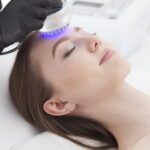
A photobiomodulation device uses LEDs to emit programmed red light at wavelengths validated by scientific research on PBM. The device is applied directly to the skin, in a localized manner, to each area of the body where muscle pain accumulates: calves, thighs, shoulders, and knees.
THE PBM offers a portable device, made in France, designed to stimulate cellular regeneration processes in just a few minutes. Sessions last from 2 to 8 minutes depending on the selected program, with three main uses:
- Preparation before physical activity: stimulate blood circulation and prepare muscle cells for the upcoming intensity.
- Post-workout recovery: Support cellular repair and minimize muscle soreness in the hours following your workout.
- Injury and Impact Management: Supporting the recovery of injured areas to ensure athletes remain available.
The device connects via a USB port to any power source, power bank, or locker room outlet. It complies with European regulatory requirements for photobiomodulation devices, including the Machinery Directive, and can be used by all athletes without any special restrictions.
Frequently Asked Questions
What is photobiomodulation (PBM) in sports?
Photobiomodulation (PBM) is a technique that uses red or near-infrared light, emitted by LEDs or a low-intensity laser, to act at the cellular level on muscles and tissues. It stimulates natural cell regeneration processes, accelerates muscle recovery, and helps manage pain after physical exertion. It is used by many professional sports teams as part of their athletic recovery routines.
Which professional teams use photobiomodulation?
Several elite teams have incorporated PBM into their daily routines: the French national soccer team during the 2018 World Cup, the Racing 92 rugby team, NFL franchises such as the Atlanta Falcons and the Cleveland Browns, as well as NBA teams. Top-level individual athletes, such as Erling Haaland, have also adopted this technology for their personal recovery.
Does photobiomodulation really improve athletic performance?
The available scientific data are consistent. The meta-analysis by Vanin et al. (2018) involving more than 1,000 participants shows improved muscle performance and reduced fatigue. The study by Leal-Junior et al. (2015) confirms a significant reduction in markers of muscle damage after exercise. A 2022 trial measured a decrease in blood lactate levels in individuals who underwent PBM sessions compared to the placebo group.
How long does a photobiomodulation session last for an athlete?
A session lasts between 2 and 8 minutes, depending on the goal. This short session fits naturally into any exercise routine—before or after a workout—without tying the athlete down or requiring bulky equipment.
Is photobiomodulation accessible to amateur athletes?
Yes. Portable devices such as THE PBM provide access to this technology outside of professional settings. Compact, powered via a USB port, and compliant with European regulations (Machinery Directive), they make photobiomodulation accessible at all levels of athletic activity.
The red light: a reflex that becomes a lasting habit
What the world’s top teams have realized is that recovery is just as much a part of performance as training. Photobiomodulation doesn’t replace the basics, but it complements them by acting where few other approaches can: directly at the cellular level, without strain, without risk, and in just a few minutes. For any athlete committed to taking care of their body and optimizing their recovery, red light deserves a place of its own in their routine.
See also:

 Combien coûte une séance de photobiomodulation ? Analyse des prix 2025Par Adèle, le 20 juin 2025
- Top 5 des nouveaux appareils portables de photobiomodulation en 2025Par Adèle, le 20 août 2025
- Centres de photobiomodulation en France : cartographie et tendances d’implantationPar Adèle, le 6 novembre 2026
- Photobiomodulation et industrie du sport professionnel : les équipes qui l’adoptentPar Adèle, le 25 novembre 2026
- Photobiomodulation en cabinet de kiné : un marché en train de basculerPar Adèle, le 19 octobre 2026
- Photobiomodulation et mutuelles santé : vers un remboursement partiel ?Par Adèle, le 1 avril 2026
- Photobiomodulation vétérinaire : décryptage d’un marché en pleine croissancePar Adèle, le 25 juin 2025
- Remboursement de la photobiomodulation par l’Assurance maladie : où en est-on en 2026 ?Par Adèle, le 1 octobre 2026