Photobiomodulation in Physical Therapy Clinics: A Market in Flux

You may have spotted a red light panel in your physical therapist’s office, or heard about light therapy sessions. Photobiomodulation (PBM) is quietly making its way into French rehabilitation practices, to the point where, for some, it’s transforming the way pain is managed and recovery is supported. But what’s really going on behind these colored wavelengths?
Light as a rehabilitation tool: What exactly are we talking about?
Photobiomodulation is based on a simple principle: exposing tissues to light of specific wavelengths—primarily in the red (630–700 nm) and near-infrared (780–1,100 nm) spectra—to trigger biological responses in cells. These wavelengths penetrate the skin to varying depths depending on their value, allowing them to affect both superficial structures, such as skin tissue, and deeper structures, such as muscles and joints.
Light energy is absorbed by cellular receptors called chromophores, particularly in the mitochondria. This mechanism stimulates cellular energy production (ATP), promotes cellular regeneration, and helps reduce local inflammation. Red light is primarily used for its effects on the skin and superficial layers, while infrared wavelengths reach deeper tissues.
In a physical therapy practice, PBM complements other techniques: it fits naturally into a treatment plan alongside massage, postoperative rehabilitation, shockwave therapy, and balneotherapy. It does not replace the physical therapist’s hands-on approach; rather, it enhances it.
Why are more and more physical therapists turning to PBM?
The market for photobiomodulation devices intended for rehabilitation professionals is experiencing significant growth. In France, several specialized suppliers estimate that the number of practices equipped with such devices has doubled between 2020 and 2025, although no official consolidated figures are available. This trend can be attributed to several converging factors.
First, demand from individuals has changed. People suffering from chronic pain, persistent muscle pain, or seeking to optimize their recovery after physical exertion are increasingly well-informed and eager to explore complementary approaches. PBM meets this need with very few side effects, making it easy to incorporate into daily life.
As for healthcare professionals, the scientific literature has advanced. Studies published in leading international journals support the effectiveness of PBM in relieving pain, reducing inflammation, and accelerating muscle recovery. Physical therapists, who are trained to interpret this data, view it as a legitimate addition to their toolkit.
Finally, the cost of equipment has fallen. LED devices, which use light-emitting diodes to emit red or infrared light at specific wavelengths, have become more affordable than first-generation laser devices. This widespread adoption of the technology has played a major role in equipping private practices.
What conditions are treated at a physical therapy practice?
PBM is not a one-size-fits-all solution for every uncomfortable situation, but its applications in rehabilitation cover a fairly broad spectrum. Physical therapists use it primarily to:
- Acute and chronic musculoskeletal pain, including tendinopathies, lower back pain, neck pain, and joint pain. A photobiomodulation session targets areas of inflammation to help better manage everyday discomfort.
- Post-surgical rehabilitation, a phase during which cellular regeneration and edema management play a central role. PBM helps support natural healing processes by stimulating collagen synthesis, which is essential for tissue repair.
- Recovery after physical exertion, particularly in the care of athletes. By affecting local blood circulation and reducing post-exercise inflammation, light helps shorten recovery times.
Some practices also offer sessions to address less common issues, such as hair loss caused by scalp conditions, or treatments designed to improve the skin’s appearance and vitality. These applications, which are less central to physical therapy, illustrate the versatility of PBM as a tool for well-being.
A PBM session at the physical therapist's office: What happens?
Before the first session, the physical therapist assesses the patient’s condition: the location of the pain, medical history, and any possible contraindications. PBM is contraindicated, in particular, for contact lens wearers (for the eye area), on open wounds or infected areas, and for pregnant women; the healthcare professional verifies these factors beforehand.
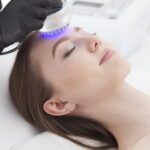
The treatment itself is painless. The device (an LED panel, laser probe, or localized applicator, depending on the model) is positioned a few centimeters from the skin or in direct contact with it. The duration varies depending on the protocol, generally ranging from 10 to 30 minutes. The patient lies down and feels no noticeable heat with LED devices, or a mild, pleasant warmth with infrared devices.
The effects are not immediate for everyone. Some people feel relief after the first few sessions, while others experience relief after a treatment plan lasting several weeks. Consistency in attending sessions is a key factor in achieving lasting results, as is often the case with approaches to physical well-being.
What Your Physical Therapist Can Actually Do (and What to Ask Them)
Physical therapists use PBM as part of their rehabilitation treatment, in addition to their manual expertise. They select the device, the settings (wavelength, duration, power), and the area to be treated based on your specific situation. This is not a fixed protocol: effective treatment requires adjustments as the sessions progress.
If you suffer from chronic pain or recurring muscle pain, it’s definitely worth asking your physical therapist if they offer photobiomodulation and for what condition they might consider it in your case. Many practitioners don’t bring it up on their own—not because they’re not interested, but because PBM is still relatively unknown to the general public, despite its growing popularity in clinics.
FAQ: Your Questions About PBM in Physical Therapy Practices
Can my physical therapist offer me a photobiomodulation session?
Yes. Photobiomodulation is one of the tools that physical therapists can incorporate into their practice. It is generally offered as a supplement to standard rehabilitation, not on its own. Ask your physical therapist directly if they have the equipment and if your condition is suitable for this treatment.
What type of photobiomodulation device is used in physical therapy?
There are two main categories: low-intensity laser devices, which are more precise and penetrate deeper, and LED panels or probes, which are more versatile and less expensive. Both emit red and/or infrared light at specific wavelengths. The choice depends on the practice, the indicated uses, and the practitioner’s investment.
Does photobiomodulation have any side effects?
The reported side effects are rare and generally minor (mild, temporary redness; temporary sensitivity). There are contraindications, which should be discussed with your healthcare provider before any treatment session.
How many sessions are needed to see results?
The number varies depending on the condition and the individual’s response. For chronic pain, 8 to 15 sessions are often recommended, at a rate of 2 to 3 sessions per week. Regular follow-up and evaluation by the physical therapist allow for adjustments based on the progress observed.
Can PBM replace conventional pain management?
No. Photobiomodulation is a complementary tool, not a substitute. It is part of a comprehensive approach to well-being and mobility, alongside the manual therapy provided by a physical therapist and, if necessary, other approaches recommended by the relevant professionals.
Photobiomodulation won’t revolutionize physical therapy overnight, but it does significantly expand its scope of possibilities. For people suffering from chronic pain or in the recovery phase, simply knowing that this option exists and is available at many practices in France is already valuable information.

 Photobiomodulation vétérinaire : décryptage d’un marché en pleine croissancePar Adèle, le 25 juin 2025
- Top 5 des nouveaux appareils portables de photobiomodulation en 2025Par Adèle, le 20 août 2025
- Remboursement de la photobiomodulation par l’Assurance maladie : où en est-on en 2026 ?Par Adèle, le 1 octobre 2026
- Combien coûte une séance de photobiomodulation ? Analyse des prix 2025Par Adèle, le 20 juin 2025
- Photobiomodulation et mutuelles santé : vers un remboursement partiel ?Par Adèle, le 1 avril 2026
- Photobiomodulation en cabinet de kiné : un marché en train de basculerPar Adèle, le 19 octobre 2026