Choosing a Full-Body Photobiomodulation Panel: Criteria, Pitfalls, and Comparison

The market for LED panels designed for full-body photobiomodulation has exploded in recent years. Hundreds of products are vying for the attention of wellness enthusiasts, all promising spectacular results with technical specifications that are often unverifiable. Yet behind the glossy product descriptions lie significant differences. Knowing how to evaluate a device before buying it makes all the difference.
What Full-Body Photobiomodulation Really Entails
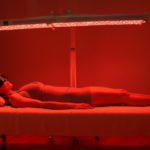
Photobiomodulation (PBM) refers to the use of red and infrared light at specific wavelengths to stimulate the body’s cells. A full-body LED panel is designed to cover the entire body surface in a single session, without having to move the device from one area to another.
The benefit of this comprehensive approach lies in its ability to target distinct areas simultaneously: the skin on the face, the back, the limbs, and deep muscle areas. For goals such as muscle recovery, collagen production, or joint comfort, this extensive coverage offers a real advantage over a simple facial mask or a handheld device.
Photobiomodulation is based on a well-documented cellular mechanism: light wavelengths penetrate the tissues and interact with the mitochondria, the cell’s powerhouses. It is this mechanism that distinguishes PBM from a simple infrared sauna or an LED panel without an active biological spectrum.
Actual power and irradiance: the first criteria to check
The power listed on an LED panel’s technical specifications is not always the same as the power received by the skin. Manufacturers often specify the electrical power consumed by the device, which is not the same as irradiance—that is, the density of light energy actually emitted toward the area being treated.
Irradiance is measured in milliwatts per square centimeter (mW/cm²). A high-quality LED panel delivers between 50 and 150 mW/cm² at a standard viewing distance of 15 to 30 centimeters. Below 30 mW/cm², the session will take too long to achieve a beneficial dose. Above 200 mW/cm², use must be carefully monitored.
The recommended session duration depends directly on the actual irradiance. For a panel delivering 100 mW/cm², a session of 10 to 20 minutes will generally be sufficient to meet everyday needs. A lower-powered device will require 40 to 60 minutes to achieve a comparable result, making daily use difficult to maintain.
Wavelengths: Not All Are Equivalent
A good full-body photobiomodulation panel must emit precisely targeted wavelengths. The two most well-documented types are red light (between 630 and 680 nm) and near-infrared light (between 810 and 850 nm).
The 660-nm red LED acts primarily on the skin’s surface: it supports collagen production, improves skin radiance, and promotes skin tissue recovery. It is the standard wavelength for all treatments involving the facial skin and the superficial layers of the epidermis.
Infrared light at 850 nm penetrates deeper into the tissues, reaching the muscles and joints. It is this wavelength that is particularly effective for muscle recovery after exercise or for providing relief to stressed joint areas.
Some LED panels offer additional wavelengths, such as 630 nm, 810 nm, or 1,064 nm. These combinations can broaden the spectrum of action, provided that the emitters in question are genuine and not simulated by a color filter. The spectrum must be verifiable through a certificate of analysis or an independent laboratory report.
Covered Area: The Promise and the Reality
A panel described as “full-body” must be large enough to cover at least the front or back of a standard-sized adult. This corresponds to an active surface area of at least 150 x 60 cm for standing use, or a modular format that allows for customization of the configuration.
Be wary of small LED panels marketed as “full-body” devices because they can be used in several successive positions. Their effectiveness is not the same: session time is extended, the continuity of exposure is interrupted, and the fatigue caused by changing positions makes regular use less practical.
The active surface must also be uniform. Some devices have dead zones around the edges or an insufficient density of LEDs along the panel’s edges. Requesting an irradiance map (heat map) from the manufacturer allows you to visualize the actual distribution of light energy across the entire panel.
Certifications and Heat Dissipation: The Criteria We Overlook
Certifications are a minimum requirement, not a guarantee of performance. A full-body LED panel intended for the European market must, at a minimum, bear the CE mark. Additional certifications (RoHS, FCC for the U.S. market, IEC 60601 for medical devices) enhance the manufacturer’s credibility but do not directly indicate the quality of the light output.
Heat dissipation is an aspect often overlooked by buyers. LEDs generate heat, and without an adequate cooling system (heat sinks, fans), their lifespan is significantly reduced and their luminous efficiency deteriorates. A panel used for 20 minutes a day over several years generates a significant amount of cumulative heat. Making sure the housing is designed to dissipate this heat is a smart purchasing decision.
The LED lifespan advertised by the manufacturer should be viewed in context: 50,000 hours equates to more than six years of daily use at full power. However, this figure assumes optimal thermal conditions, which are rarely guaranteed on entry-level devices.
Identifying Misleading Marketing Data
The red LED and red photobiomodulation industry is not immune to questionable business practices. There are a few red flags to watch for when reading a product description:
- Total power in watts without specifying irradiance: an isolated data point that cannot be used to compare two panels.
- The lack of a certified light spectrum: Any reputable brand can provide a laboratory-measured emission spectrum.
- Studies cited without specific references —such as vague references to “clinical studies” without an author, journal, or year—are red flags.
- The infrared sauna is often presented as the equivalent of a PBM panel: the two technologies are complementary but fundamentally different. An infrared sauna works by regulating body temperature, while a photobiomodulation LED panel works through photochemical interaction.
The applications of photobiomodulation are now well established, and an informed buyer can rely on objective criteria to compare devices without being swayed by unverifiable claims.
Frequently Asked Questions
What is the difference between a full-body LED panel and a photobiomodulation face mask?
A facial mask targets only the face, using wavelengths suited to the skin’s surface, specifically to support collagen production and enhance skin radiance. A full-body LED panel covers the entire body, allowing it to simultaneously treat the skin, muscles, and joints. The two devices are complementary but serve distinct purposes.
How can you verify the actual power output of a photobiomodulation panel?
Actual power is measured in irradiance (mW/cm²) at the operating distance specified by the manufacturer. Request an independent measurement report or a spectral analysis certificate. The electrical power consumption (in watts) listed on the technical data sheet does not directly indicate the amount of light energy received by the skin.
What wavelengths are recommended for a full-body PBM panel?
The most well-documented wavelengths are red at 660 nm for surface treatment (collagen, skin) and near-infrared at 850 nm for deep penetration (muscle recovery, joints). Some panels combine other wavelengths, such as 630 nm or 810 nm, to broaden the spectrum of action.
How long should a session with a full-body LED panel last?
The duration depends on the device’s actual irradiance. With a panel delivering 100 mW/cm², a 10- to 20-minute session is generally appropriate for regular wellness use. A less powerful device will require more time to reach a comparable dose. Consult the best practices for photobiomodulation to tailor your use.
Does a full-body photobiomodulation panel replace an infrared sauna?
No, these two devices work in different ways. An infrared sauna primarily works by raising body temperature. A photobiomodulation LED panel interacts with cells through photochemical processes, without generating significant heat. They can complement each other, but they are not substitutes for one another.
Investing in a PBM panel: How to Make the Right Choice
Choosing a full-body photobiomodulation panel requires a level of due diligence that few buyers undertake on their own. Looking beyond the product specifications, requesting test reports, comparing actual irradiance levels, and verifying the quality of heat dissipation: these are the steps that distinguish a well-informed purchase from a costly disappointment.
The photobiomodulation equipment market offers devices of widely varying quality, sometimes at similar prices. Taking the time to analyze the available technical data—and not hesitating to contact a manufacturer’s customer service department to obtain additional documentation—remains the best way to protect yourself from disappointing purchases.
See also:

 Photobiomodulation à domicile : check-list sécurité pour débuterPar Adèle, le 23 octobre 2025
- Photomodulation avant-après : réalités vs fantasmes sur les résultats visiblesPar Adèle, le 2 novembre 2026
- Photobiomodulation : 2 semaines pour améliorer naturellement votre sommeilPar Adèle, le 20 mars 2026
 Choisir un panneau de photobiomodulation corps entier : critères, pièges et comparatifPar Adèle, le 20 novembre 2026
- Photobiomodulation visage : avant-après d’une cure anti-âgePar Adèle, le 23 juin 2025
- Choisir un panneau de photobiomodulation corps entier : critères, pièges et comparatifPar Adèle, le 20 novembre 2026
- Photobiomodulation : journal de bord d’un utilisateur après 3 mois de cure quotidiennePar Adèle, le 26 octobre 2026
- Photobiomodulation : combien de séances faut-il pour voir des résultats ?Par Adèle, le 14 octobre 2026
- Photobiomodulation : dangers, contre-indications et idées reçuesPar Adèle, le 22 juillet 2025
- Comment choisir son casque de photobiomodulation pour la repousse des cheveuxPar Adèle, le 26 juin 2025