Photobiomodulation: 2 weeks to naturally improve your sleep

Poor sleep is a bit like driving with the parking brake on. The body keeps going, but nothing really recharges. In the face of restless nights and exhausting wake-ups, an increasingly accessible technology is gaining attention: photobiomodulation, or PBM. Recent studies suggest something interesting: in just two weeks, a regular routine could help significantly improve sleep quality.
What Light Does to Your Brain
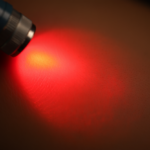
Photobiomodulation relies on the use of red and near-infrared light emitted by LEDs. These wavelengths, ranging from approximately 630 to 850 nm, do not remain on the surface. They penetrate the tissues and reach the cells, where they activate the mitochondria—the tiny powerhouses that produce ATP, the body’s primary energy source.
This mechanism has a direct effect on the brain: by acting on the light-sensitive ganglion cells of the retina, PBM can help regulate circadian rhythms. These rhythms, which govern the 24-hour sleep-wake cycle, are extremely sensitive to light signals. When they become disrupted, difficulty falling asleep sets in, often accompanied by persistent fatigue upon waking.
Unlike the blue light emitted by screens, red light does not suppress melatonin production. It can even promote it at the end of the day by signaling to the body that night is approaching, much like the reddish hues of a sunset. At the same time, PBM helps reduce oxidative stress in certain brain structures involved in sleep regulation.
Stress, anxiety, and sleepless nights
The link between stress, anxiety, and sleep disorders is well documented. When the nervous system remains on high alert, falling asleep becomes difficult, nighttime awakenings become more frequent, and restful sleep remains out of reach.
This is where photobiomodulation acts as a soothing agent. By influencing the autonomic nervous system and helping to regulate cortisol levels, red and infrared light can help the body emerge from this state of tension. Many users report a sense of physical relaxation after sessions, a pleasant heaviness in their limbs, and a natural slowing of their breathing.
Stress management also involves reducing inflammation. PBM has been shown to have anti-inflammatory effects at the cellular level, particularly by limiting the production of certain pro-inflammatory molecules. A body with less inflammation is also a body that recovers better at night.
A 2-week routine: what does it actually look like?
One of the benefits of photobiomodulation is that it can easily be incorporated into your daily routine. There’s no need for bulky equipment or difficult scheduling. Photobiomodulation sessions typically last 10 to 20 minutes.
When it comes to sleep, the timing makes a difference. The morning is often recommended to promote wakefulness and stabilize circadian rhythms throughout the day. Some prefer a session in the early evening, well before bedtime, to facilitate the relaxation phase. What matters is consistency: two weeks of daily or nearly daily sessions usually yield the first results.
Here's how to structure this 14-day routine:
- Days 1–4: A short session (10 minutes) in the morning to help your body adjust to the light stimulation and begin resetting your circadian rhythms.
- Days 5–10: Gradually increase to 15–20 minutes, maintaining a daily routine. Pay attention to the following: how easily you fall asleep, nighttime awakenings, and how you feel upon waking.
- Days 11–14: Solidify your routine and adjust the timing of your session based on how you feel. Sleep quality often begins to improve noticeably during this period.
Skin, the face, and LED masks: an added benefit
Photobiomodulation treatments aren’t just about sleep. When you use an LED mask on your face, the benefits are cumulative: your skin also benefits from the effects of red light on collagen production and the reduction of local inflammation.
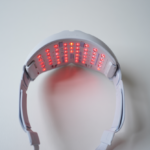
The LED face mask is probably the most widely used PBM device for daily use. Compact and easy to use, it allows you to expose your face to red and infrared wavelengths while sitting in your living room. For those looking to combine skin wellness with improved sleep, it’s a practical option. The skin appears more radiant, facial tension is reduced, and this physical relaxation naturally helps you fall asleep more easily.
What two weeks can change
Photobiomodulation isn’t a miracle cure, and it doesn’t replace good sleep hygiene. However, when used to complement existing habits, it can significantly help improve the quality of your sleep. Within two weeks, the first changes are often noticeable: falling asleep faster, fewer nighttime awakenings, and a bit more energy in the morning.
PBM works gently, improving sleep quality from the inside out, at the cellular level. This is precisely what sets it apart from more direct approaches: it supports the body’s natural mechanisms rather than bypassing them. Whether for your sleep or your overall well-being, it usually takes just two weeks to notice a difference.
See also:

 Photobiomodulation visage : avant-après d’une cure anti-âgePar Adèle, le 23 juin 2025
- Photobiomodulation : dangers, contre-indications et idées reçuesPar Adèle, le 22 juillet 2025
- Photobiomodulation : 2 semaines pour améliorer naturellement votre sommeilPar Adèle, le 20 mars 2026
- Photobiomodulation à domicile : check-list sécurité pour débuterPar Adèle, le 23 octobre 2025
- Comment choisir son casque de photobiomodulation pour la repousse des cheveuxPar Adèle, le 26 juin 2025