Photobiomodulation: A User's Diary After 3 Months of Daily Treatment

Three months. Ninety sessions. One question at the start: Does it really work? The log you’re reading isn’t a sales pitch. It’s an honest account, week by week, of how photobiomodulation has (or hasn’t) changed daily life.
Why start a daily photobiomodulation treatment regimen?
It all started out of curiosity, after seeing testimonials pop up on social media. Reviews on forums, personal experiences, before-and-after photos showing improvements in skin quality, hair loss, and recovery. Nothing spectacular at first glance, but consistent enough to make me want to give it a try.
The initial goal was twofold: to observe the effect of red light on mild hair loss that had been getting worse over the past few months, and to see if LED sessions could improve skin quality, particularly stretch marks on the legs. I didn’t have any unrealistic expectations.
The wavelengths used correspond to the ranges documented in scientific studies as having an effect on blood circulation and collagen production.
Weeks 1–3: No visible effects, but changes in sleep patterns
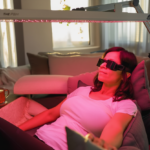
The first session leaves you with a strange feeling. No intense heat, no tingling—just the light. You wonder if it’s really doing anything.
During the first two weeks, there were no visible results on my skin or hair. However, I did notice something unexpected: my sleep seems more consistent. It’s not dramatic, but it’s there—consistent. I fall asleep more quickly. In the morning, my body feels less heavy.
Scientific studies on photobiomodulation mention this effect on the circadian rhythm and cellular recovery. At this point, it is difficult to definitively attribute this change to the sessions, but the coincidence is striking.
Weeks 4–6: The First Effects on the Skin
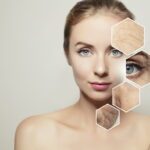
The fourth week marks a turning point. The skin’s texture appears more even, and the complexion looks less dull. Minor imperfections that have been there for years seem to be fading slightly.
Photobiomodulation is known to stimulate the production of collagen and elastin. These two structural proteins play a key role in skin firmness and elasticity. It takes several weeks for the effects to become visible on the skin’s surface, as the skin’s cell renewal cycle runs its course.
As for the stretch marks on my legs, however, there has been no noticeable change at this point. We'll just have to wait and see.
Weeks 7–9: The Scalp and Hair Loss
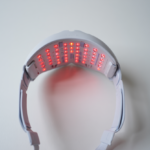
This was the part that required the most patience. Hair loss doesn’t reverse overnight. Red light works on the scalp by stimulating microcirculation in the hair follicles. The effects on hair loss aren’t immediate: scientific studies indicate that visible results generally require eight to twelve weeks of regular sessions.
By the ninth week, hair loss in the shower has slowed. It’s hard to be sure at first, but the trend has been consistent for two consecutive weeks. The scalp seems to be responding. The existing hair appears slightly thicker at the roots.
What didn't work: no visible effect on damaged hair. The light acts on the hair follicle and blood circulation, not on the hair shaft that has already formed. In this regard, our expectations were unrealistic from the start.
Weeks 10–12: The cumulative effects are confirmed
This is where the concept of cumulative effects really comes into play. Photobiomodulation doesn’t work as a one-time treatment. It relies on consistency: each session reinforces the effects of the previous ones.
At the twelve-week mark, the results are clear on several points. Overall energy levels have improved. While there hasn’t been a radical transformation, the ability to recover after exercise has improved significantly. The diffuse pain in the legs after long days on my feet has decreased. My perceived quality of life on a day-to-day basis has improved.
As for the stretch marks on my legs, a slight change became apparent between the tenth and twelfth weeks. They are less pronounced and less visible to the eye. They haven’t disappeared, but there has been a real improvement, as confirmed by photos taken at regular intervals.
It is on the skin that the cumulative effects are most evident—a subtle but real transformation that has taken place over time.
What Didn't Work and What You Need to Know Before You Start
There were no side effects during this period of use. No irritation, no discomfort. When proper practices and safety guidelines are followed, LED sessions are well tolerated.
However, there are two points worth mentioning honestly. Consistency makes all the difference: skip a week of treatments, and progress visibly slows down. Furthermore, results vary depending on the area of the body. The skin on the face responds more quickly than stretch marks or the scalp.
Anyone expecting visible results after the very first session will be disappointed. Photobiomodulation is a long-term process, not a quick fix.
Frequently Asked Questions
How many sessions does it take to see results from photobiomodulation?
The first noticeable effects generally appear between the third and sixth week of daily sessions. Results for the skin and hair require more consistency, often taking between eight and twelve weeks. The effects are cumulative and depend directly on the frequency of the sessions.
Does photobiomodulation really help with hair loss?
Red light acts on the scalp by stimulating blood circulation around the hair follicles, which can slow hair loss and promote regrowth. Available scientific studies show positive results for certain types of hair loss, provided the treatment is used regularly over several weeks.
Are there any side effects from photobiomodulation sessions?
When used in accordance with recommended best practices and safety guidelines, photobiomodulation is well tolerated. Side effects are rare and are generally related to use that does not follow the recommendations. It is advisable to read the instructions carefully before beginning.
Does photobiomodulation improve skin quality?
Red light and near-infrared light stimulate the production of collagen and elastin, two proteins essential for skin firmness and radiance. The effects on skin quality are among the best documented in scientific studies on photobiomodulation, with visible results after several weeks of regular sessions.
Can photobiomodulation be used to treat leg pain?
Photobiomodulation affects blood circulation and can help manage general discomfort, particularly in the legs after a long day. The effects vary depending on the individual and how regularly the treatment is administered. To learn more about its potential applications, the page dedicated to the applications of photobiomodulation provides a comprehensive overview.
Three months later: a practice that’s taking root over time
After ninety sessions, the conclusion is simple: photobiomodulation delivers on its promises as long as you devote the necessary time to it. The benefits of photobiomodulation don’t appear overnight. They develop gradually, week after week, as long as you maintain a consistent routine.
My personal experience has been positive in terms of energy levels, sleep, skin quality, and managing hair loss. To understand how light works and how to choose the right wavelengths, the “Equipment and Technology” page and the overview of photobiomodulation are a useful starting point before getting started.
See also:

 Photobiomodulation à domicile : check-list sécurité pour débuterPar Adèle, le 23 octobre 2025
- Photobiomodulation : 2 semaines pour améliorer naturellement votre sommeilPar Adèle, le 20 mars 2026
- Photobiomodulation : combien de séances faut-il pour voir des résultats ?Par Adèle, le 14 octobre 2026
- Photobiomodulation : dangers, contre-indications et idées reçuesPar Adèle, le 22 juillet 2025
- Photobiomodulation visage : avant-après d’une cure anti-âgePar Adèle, le 23 juin 2025
- Comment choisir son casque de photobiomodulation pour la repousse des cheveuxPar Adèle, le 26 juin 2025
- Photobiomodulation : journal de bord d’un utilisateur après 3 mois de cure quotidiennePar Adèle, le 26 octobre 2026