How to choose a photobiomodulation helmet for hair regrowth
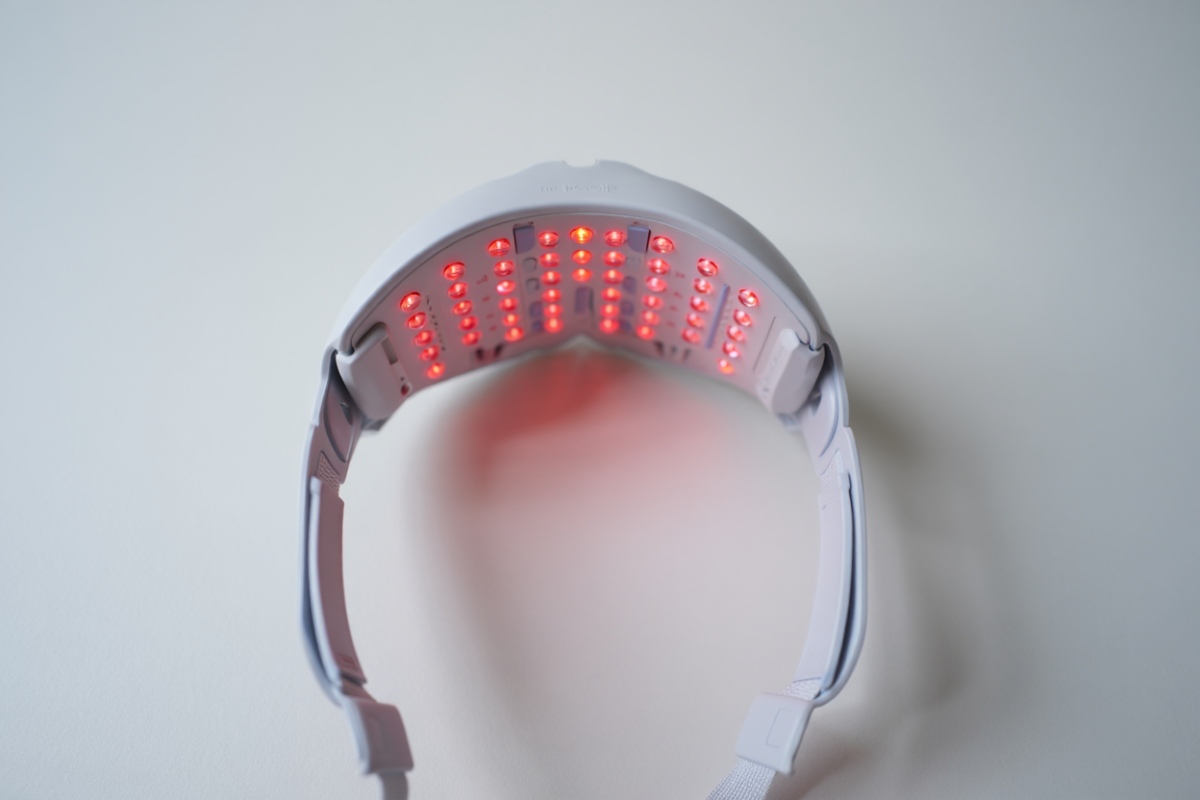
Hair loss affects millions of people in France, both men and women, and the available solutions can sometimes be invasive or inconvenient. In recent years, the LED hair regrowth helmet has emerged as a gentle, at-home alternative for gently stimulating hair follicles. The challenge is choosing the right model: between laser helmets and LED helmets, the number of diodes, and certifications, there are plenty of factors to consider.
What light actually does to the scalp
Photobiomodulation is based on a specific principle: specific wavelengths of light, emitted by LEDs or laser diodes, penetrate the scalp and reach the hair follicles. Once there, they stimulate the mitochondria within the cells, prompting them to produce more ATP, the molecule that supplies the energy needed for cellular activity. Hair follicles in the resting phase (telogen phase) are thus encouraged to return to the active growth phase (anagen).
Light also promotes local microcirculation in the scalp. Improved blood flow means more oxygen and nutrients are available to nourish the hair follicles, which naturally supports hair growth. This mechanism explains why clinical studies have observed an increase in hair density after several weeks of regular use of a laser or LED helmet.
It is important to understand that these devices do not cure alopecia in the medical sense: they help create conditions conducive to hair regrowth by influencing the biological processes of the hair follicles.
Laser hair growth cap or LED hair growth cap: What’s the difference for your hair?
The distinction between laser hair growth devices and LED hair growth devices is often a source of confusion. Both technologies use light to stimulate the scalp, but they work in slightly different ways.
A laser helmet emits a coherent, concentrated beam. This precision allows for targeting hair follicles with high energy density over a small area. The most common models use Class 3R laser diodes, which comply with safety standards. Their effectiveness against androgenetic alopecia has been documented in several clinical studies, and some devices have received marketing authorization from the FDA, the U.S. regulatory agency.
An LED helmet, on the other hand, emits non-coherent light over a wider area. The preferred wavelength for hair is between 630 and 660 nm (red light), sometimes supplemented by near-infrared light at 810–850 nm to penetrate deeper into the scalp. LED helmets provide better coverage of the entire scalp in a single session, making them particularly well-suited for independent use at home.
In practice, the two approaches can complement each other. Some high-end models combine laser diodes and LEDs to offer the benefits of both technologies in a single headset.
What factors should you consider before buying an LED hair cap?
Choosing a photobiomodulation helmet for hair regrowth requires comparing several concrete factors, beyond mere marketing claims.
The first criterion is the number of LEDs. An effective helmet designed to cover the entire scalp must have enough LEDs to ensure that no area is left untreated. High-quality models typically feature between 80 and 272 LEDs, depending on the area to be treated.
Wavelength is just as critical. For hair regrowth, the ideal range is between 630 and 660 nm to stimulate the hair follicles on the surface, and around 830 nm to reach the hair bulb deep within the scalp. An LED helmet that only emits wavelengths outside this range will have little effect.
The energy density, or fluence, delivered per session also affects the results. Well-designed devices deliver between 4 and 6 J/cm² per use of the headset, which falls within the range recommended in clinical studies.
Here are the key points to check before making a purchase:
- Certification: A laser or LED hair growth device must have a reputable certification. A recognized certification or transparent technical data (wavelengths, fluence, LED lifespan) are good indicators of reliability when assessing a device’s safety.
- Session duration: Properly calibrated headsets offer sessions ranging from 10 to 25 minutes, with an automatic timer to prevent overuse.
How does a session with an LED headset work?
Using the helmet is simple and requires no special training. Most models available in France feature preset programs designed for safe, unsupervised home use without the risk of overdose.
The treatment is typically performed on clean, dry hair. The helmet is placed on the scalp and then activated for a preset duration. While the helmet is in use, light passes through the hair to reach the scalp and the underlying hair follicles. The treatment is painless and silent.
The recommended frequency varies depending on the device and the type of hair loss: generally, three sessions per week during the first few months are sufficient to see results in hair growth. Consistency is the key factor: photobiomodulation produces cumulative effects that gradually become visible in hair density.
Androgenetic alopecia: Who is the LED helmet suitable for?
Androgenetic alopecia is the most common form of hair loss, affecting both men (receding hairline and crown) and women (diffuse thinning of the scalp). It results from the hair follicles’ sensitivity to androgens, which gradually shortens their growth cycle.
The vast majority of clinical studies on LED and laser hair growth devices focus on this type of alopecia. The results show a measurable increase in hair density after 16 to 26 weeks of regular use, with more pronounced effects on hair loss than on the regrowth of new hair strands.
How much does a photobiomodulation helmet cost?
LED hair growth helmets represent an investment that varies depending on the technology used and the number of LEDs. Entry-level LED helmets are available for around 300 to 500 euros, while helmets that cover the entire scalp typically cost between 800 and 1,000 euros in France.
It’s tempting to go for the cheapest model, but asking a few questions can help you make the right choice: Does the device clearly indicate its wavelengths? Does the manufacturer provide data on the delivered fluence? Are there any clinical studies that mention this device or a comparable model? Asking these questions helps you avoid investing in a light-based device that has no real effect on hair follicles.
Another practical consideration is the lifespan of the LEDs. LEDs typically have a lifespan of 10,000 to 50,000 hours, which translates to several years of daily use.
Frequently Asked Questions
How long does it take to see results with an LED hair growth helmet?
The first results regarding hair loss are generally visible after 8 to 12 weeks of regular use. A noticeable increase in hair density is most evident between the 16th and 26th weeks. Hair regrowth is a slow process: consistency in treatment is more important than the duration of each session.
Can you use an LED helmet after a hair transplant?
Yes, photobiomodulation is often recommended as a complementary treatment to a hair transplant to support graft establishment and promote their growth. Use of the helmet generally begins a few weeks after the procedure, following the advice of the specialist who performed the transplant.
Can the LED helmet replace other treatments for alopecia?
The LED helmet is a complementary, non-exclusive approach. It can be used in conjunction with other hair care treatments or as a supplement to a hair transplant. For androgenetic alopecia, a combined approach generally yields better results than a standalone solution.
Take action with the right criteria in mind
Choosing a photobiomodulation device for hair regrowth is an investment that warrants careful consideration. LED hair technology has proven effective in clinical studies, provided you choose a reputable device: one with wavelengths suited to the scalp, a sufficient number of LEDs, and clear instructions for use. Consistency in treatment sessions is then key to helping hair follicles gradually return to their natural growth cycle.
See also:

 Photobiomodulation : dangers, contre-indications et idées reçuesPar Adèle, le 22 juillet 2025
- Photobiomodulation à domicile : check-list sécurité pour débuterPar Adèle, le 23 octobre 2025
- Comment choisir son casque de photobiomodulation pour la repousse des cheveuxPar Adèle, le 26 juin 2025
- Photobiomodulation visage : avant-après d’une cure anti-âgePar Adèle, le 23 juin 2025
- Photobiomodulation : 2 semaines pour améliorer naturellement votre sommeilPar Adèle, le 20 mars 2026