Stress, inflammation, and the scalp: how does photobiomodulation work synergistically?

When stress becomes chronic, the entire body feels its effects. The scalp is no exception. Sensitive, sometimes painful, and often the first to signal an internal imbalance, it deserves our attention. Photobiomodulation, or PBM, has been attracting growing interest for several years due to its effects on living tissue. But how exactly does it influence the interplay between stress, inflammation, and scalp health?
When stress shows on your scalp
The link between prolonged stress and changes in the scalp is now well documented. When a person experiences a period of intense stress, their body releases hormones such as cortisol, which disrupt numerous biological functions. In the skin and scalp, this frequently results in a local inflammatory reaction: microcirculation constricts, nutrient supply to the hair follicles decreases, and the cellular environment gradually deteriorates.
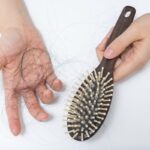
This inflammatory condition can accelerate hair loss. Weakened hair follicles enter the resting phase prematurely, leading to diffuse hair loss. Stress-related hair loss is not inevitable. However, it requires addressing multiple factors simultaneously, starting with reducing underlying inflammation.
Photobiomodulation: Light That Communicates with Cells
Photobiomodulation relies on the emission of red or near-infrared light at specific wavelengths, generally ranging from 630 to 850 nm. These wavelengths do not heat the tissues; they stimulate them. Specifically, the photons emitted by LED sources or laser LEDs penetrate the skin and reach the deeper layers where the mitochondria are located—the true energy powerhouses of our cells.
The primary effect is a boost in ATP production—the molecule that provides the energy needed for cellular activity. At the same time, infrared and red light help regulate inflammatory responses: pro-inflammatory markers decrease, microcirculation improves, and cells return to a more balanced state of function.
These mechanisms explain why the benefits of photobiomodulation are of such interest to professionals in the fields of hair care, muscle recovery, and chronic pain management. The effects of light are not limited to a single tissue; they trigger a systemic cellular response.
A treatment that targets hair follicles and hair regrowth
When applied directly to the scalp, LED light primarily acts on the hair follicles. These microstructures are responsible for hair growth. When regularly exposed to photobiomodulation sessions using the appropriate wavelengths, they receive an increased energy supply that can support their natural activity.
The results observed as part of a regular hair care routine point to several positive effects:
- A reduction in hair loss, particularly in cases caused by oxidative stress or chronic scalp inflammation.
- A noticeable improvement in hair density, with hair appearing thicker after several weeks of photobiomodulation sessions.
- Supports hair regrowth in weakened areas by improving local blood flow.
Nevertheless, it is important to view the results realistically. Photobiomodulation is not a substitute for a comprehensive approach to treating hair loss. However, it can be effectively incorporated into a comprehensive hair care regimen, alongside dietary changes or better stress management.
Oxidative stress, inflammation, and light: a complex interplay
One of the strongest theories explaining the benefits of scalp photobiomodulation centers on its effect on oxidative stress. This phenomenon, often exacerbated by chronic stress, generates unstable molecules that damage cells and accelerate tissue aging, including that of the scalp.
By stimulating mitochondrial activity, red light helps restore a balance between the production and neutralization of these molecules. The underlying inflammation, which contributes to follicular fragility, is gradually reduced. It is this dual action—both energizing and anti-inflammatory—that sets photobiomodulation apart from other approaches to LED light therapy.
Similar mechanisms can also be found in other areas where PBM is applied: muscle recovery after exercise, pain management—particularly chronic pain of inflammatory origin—and even skincare. Light plays a role wherever cells need support to perform their natural functions.
What You Need to Know Before You Begin
There are no specific prerequisites for using photobiomodulation sessions to care for your scalp. The LED devices available—whether dedicated helmets or multi-zone panels—can be used at home in a simple and safe setting.
Here are a few things to keep in mind before you get started:
- Reported side effects are rare and mild: a slight, temporary redness of the skin may occur, but it is harmless.
- Consistency is key. Results don’t appear after just one or two sessions. It takes several weeks to see any improvement, especially when it comes to hair loss.
- Red light and infrared light are not suitable for all situations. Professional advice is still recommended for individuals with specific medical histories or who are taking certain photosensitizing substances.
It should be noted that photobiomodulation is sometimes associated with aesthetic medicine in specialized clinics. However, it can certainly be considered a standalone wellness practice that does not require a professional setting.
Toward a Holistic Approach to Hair Health
The scalp is a sensitive area, situated at the interface between the body and the outside world. Stress affects it, inflammation wears it down, and the hair often bears the marks of this silently. Photobiomodulation does not claim to solve everything. It offers a serious, evidence-based approach to supporting a follicular environment more conducive to hair growth, while addressing the underlying inflammatory mechanisms.
When incorporated into a mindful lifestyle, along with active stress management and appropriate hair care, red light therapy can serve as a subtle yet effective support for those who wish to care for their hair using gentle, non-invasive methods.
See also:

 Alzheimer, Parkinson, dépression : où en est la neuro-photobiomodulation ?Par Adèle, le 6 novembre 2025
- Arthrose du genou et photobiomodulation : ce que montrent les études récentesPar Adèle, le 1 avril 2026
- Fibromyalgie : pourquoi la photobiomodulation séduit les centres antidouleurPar Adèle, le 8 janvier 2026
- Fracture persistante : la photobiomodulation peut-elle accélérer la guérison ?Par Adèle, le 7 juillet 2025
- Photobiomodulation et performance sportive : retour d’expériencePar Adèle, le 3 décembre 2025
- Photobiomodulation vaginale : la révolution intime ?Par Adèle, le 27 juin 2025
- Photobiomodulation pour le COVID long : état des lieuxPar Adèle, le 15 septembre 2025
- Stress, inflammation et cuir chevelu : comment la photobiomodulation agit-elle en synergie ?Par Adèle, le 25 février 2026